
Credit card dual page experience redesign
Driving higher application and account conversion through personalized credit card experiences
Key results
Phase 1: Targeted audiences: 26% and 11% application start rates; 2.49% and 3.40% new account conversion.
Phase 2: General traffic: +10.2% application starts, +9.6% completions, +11.3% net new accounts.
The challenge
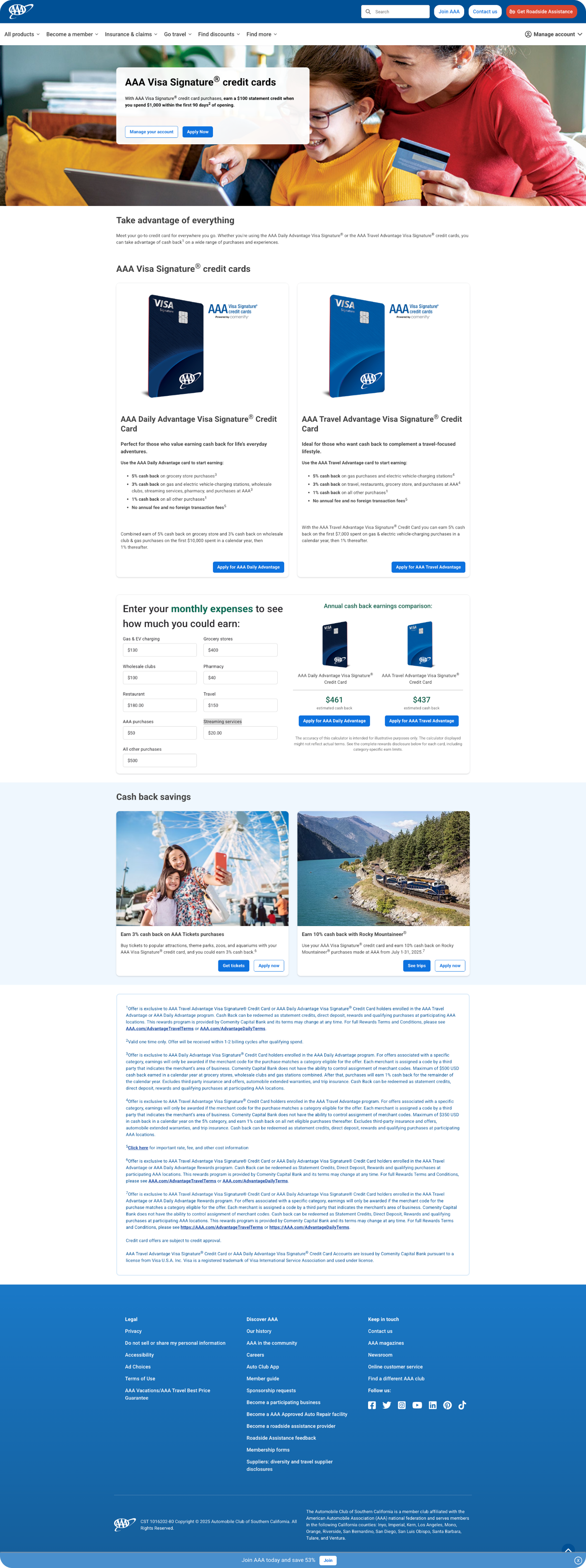
The organization offered two different credit card products, but the existing credit card experience was not optimized for different member needs and intent. A single, undifferentiated page asked every member — whether travel-motivated, everyday-rewards-motivated, or still comparing — to self-select their way to the right product.
The goal was to create more relevant and engaging experiences that would increase credit card awareness, application starts, and new account acquisition.
The solution
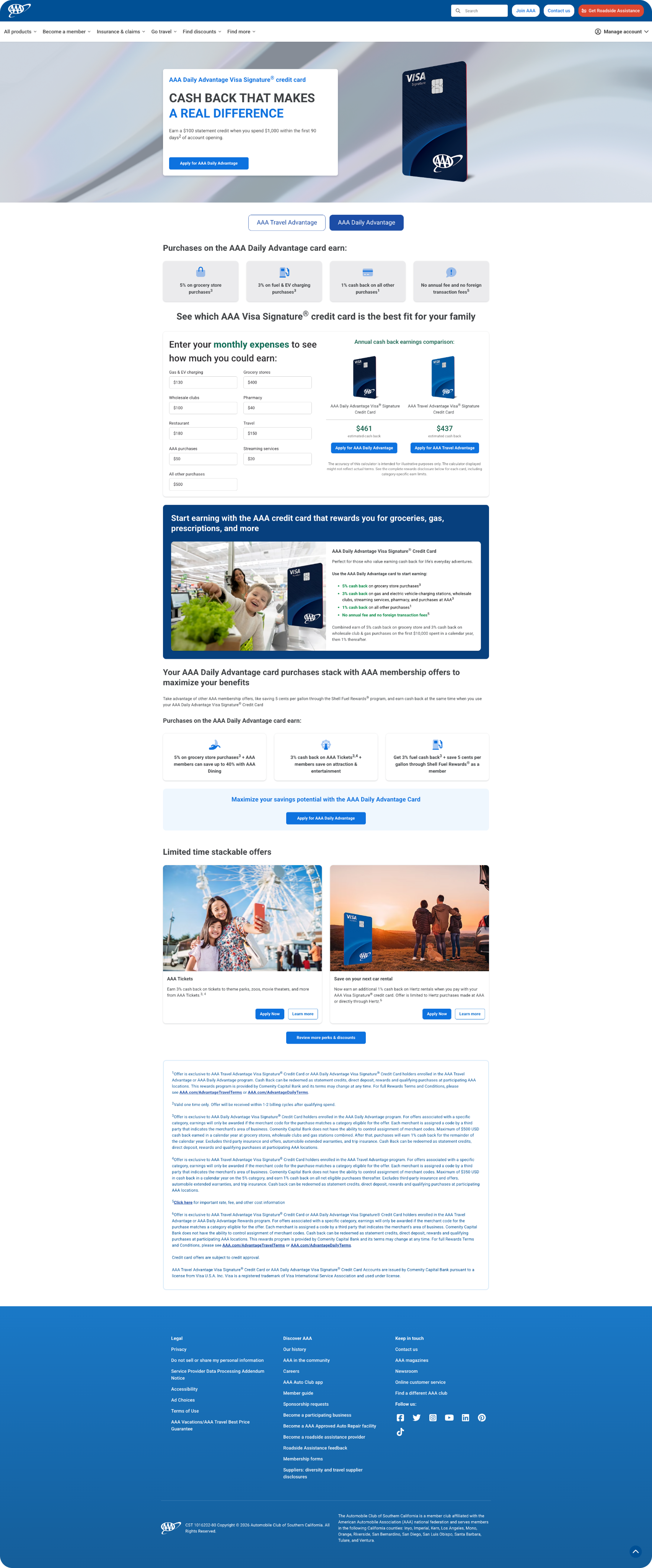
Three intent-based experiences: Dual Card for members evaluating both card options, Travel Card for travel-focused members, and Daily Card for everyday rewards. Each with clearer value props, stronger content hierarchy, and CTAs matched to member intent.
Phase 1: Targeted audience validation
Tested with two high-intent segments.
Members with prior card, travel, or rewards engagement started applications at 26% and converted to new accounts at 2.49%. Members pre-screened for eligibility started at 11% but converted at 3.40% — the highest account rate in the program.
Takeaway: Interest drives starts. Eligibility drives completions. Both confirmed that matching design to intent works, but not whether the design alone deserved credit.
Phase 2: Head-to-head vs. original experience
Same design, general traffic, direct A/B test against the existing page.
Application start rate rose from 4.48% to 4.94%, a lift of 10.2%. Application completion rate rose from 3.22% to 3.53%, up 9.6%. Net account rate rose from 2.0% to 2.2%, up 11.3%.
Takeaway: The lift held down the entire funnel, and the biggest gain landed on new accounts, which is the metric closest to revenue. No offer or product changed. Only the experience did.
Conclusion
Phase 1 proved relevance drives engagement. Phase 2 proved the design carried the lift on its own, without targeting.
Targeting is capped by audience size, but experience improvements scale across all traffic. The pattern is validated and ready to extend to the Travel and Daily experiences.